- Parc Científic i Tecnològic de Girona
C/ Pic de Peguera, 11 - Oficina Tècnica A.1.15
17003 Girona. - 972 10 68 08
- info@tendalsgirona.cat
 Català
 Castellano
 English


Sails stretched
Sails stretched

What Is a Tensioned Sail and What Makes It Different from a Traditional Awning
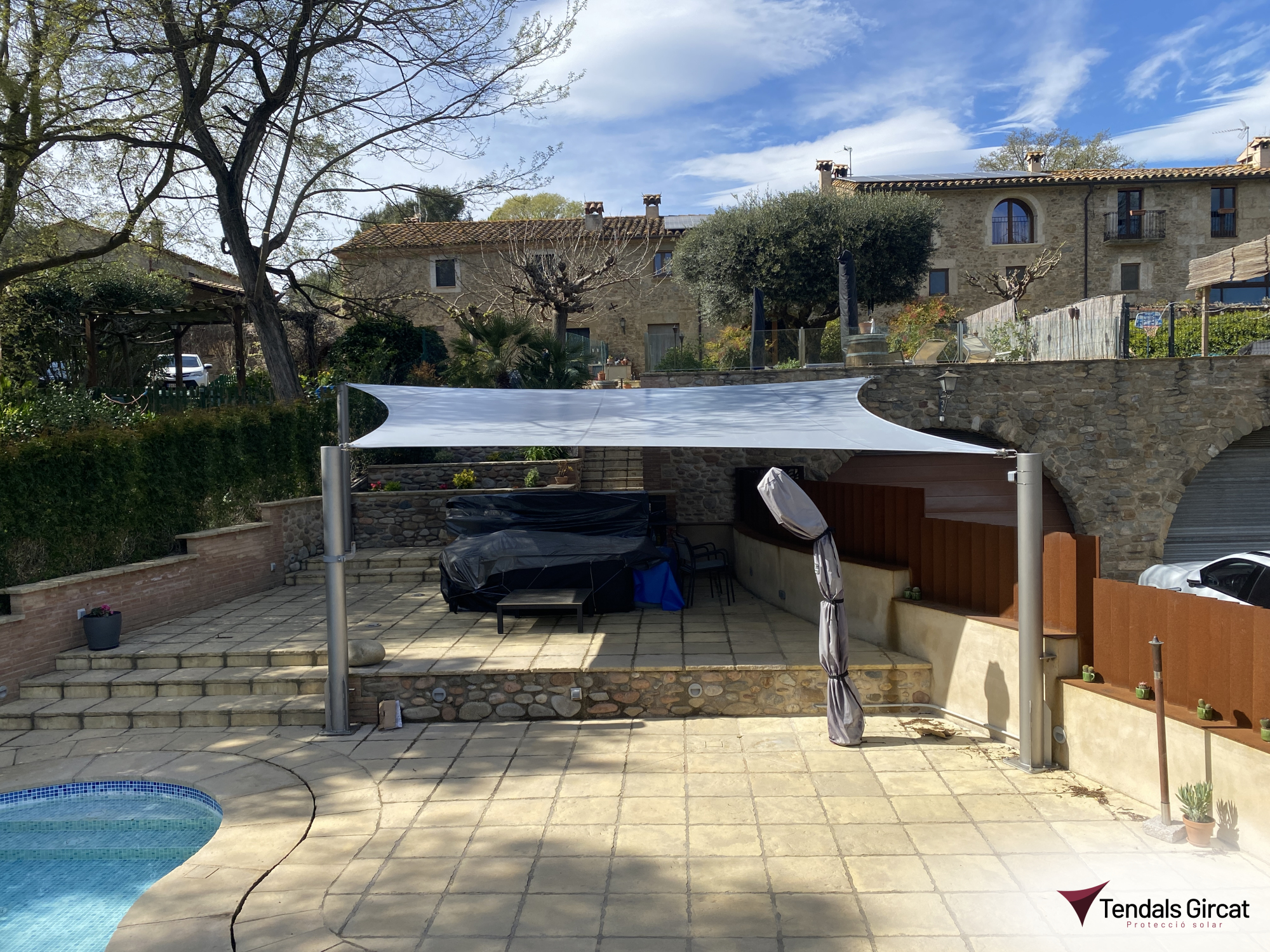
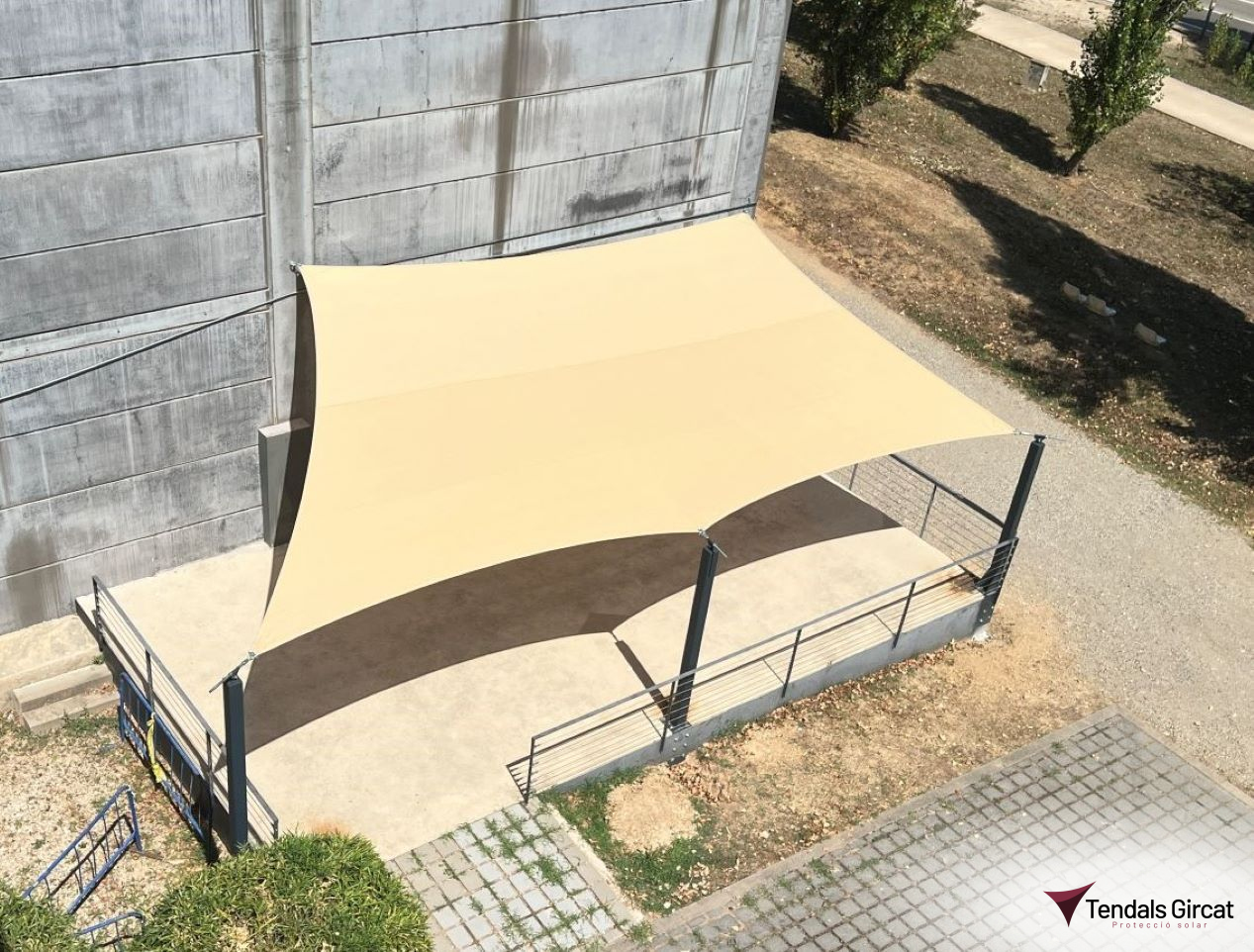
A tensioned sail is a textile covering installed under tension between walls and/or posts, designed to create effective shade or provide rain protection in patios, terraces, and outdoor spaces. Unlike a traditional awning, once installed, the sail remains tightly tensioned and stable, with strategic anchor points and sufficient slope to allow water to drain without forming pockets.
Installation in Girona and surrounding areas, due to local weather conditions, requires a design with very solid anchor points, clean lines, and a properly resolved minimum slope to manage water runoff and withstand wind forces.
Key Benefits
• Real sun protection and a more pleasant temperature in shaded areas.
• Weather and UV resistance thanks to technical fabrics.
• Versatility in shapes and sizes: triangular, trapezoidal, or irregular depending on the space.
• Aesthetic appeal: architectural, clean, and contemporary finish.
• Low maintenance: fabrics designed to resist fading and external agents.
• Weather and UV resistance thanks to technical fabrics.
• Versatility in shapes and sizes: triangular, trapezoidal, or irregular depending on the space.
• Aesthetic appeal: architectural, clean, and contemporary finish.
• Low maintenance: fabrics designed to resist fading and external agents.
Fabrics and Finishes: Micro-Perforated or PVC — How to Choose the Right One
Choosing the right fabric is simple. We work with Commercial 95 micro-perforated fabric and PVC; the decision depends on usage, exposure, and whether 100% waterproofing is required.
• Micro-perforated (Commercial 95)
Allows airflow; perfect for areas with frequent breezes where ventilation is key. In restaurants, this fabric helps reduce the sail effect and keeps the environment cool without creating a feeling of enclosure.
Allows airflow; perfect for areas with frequent breezes where ventilation is key. In restaurants, this fabric helps reduce the sail effect and keeps the environment cool without creating a feeling of enclosure.
• PVC (Soltis W-96, Soltis 622)
The best option when the priority is rain protection.
The best option when the priority is rain protection.
Provides full waterproofing and total shade when slopes and drainage points are properly calculated. In winter or mid-season projects, PVC helps extend terrace usability.
Colors and finishes: We offer a wide range of colors that integrate with façades and furniture, and lacquered posts elegantly complement the space.
Professional Design and Installation: Shapes, Anchoring, and Drainage
A tensioned sail works properly when it meets three key requirements:
- Reliable anchor points (wall and/or posts) with very solid plates and fixings.
- Proper tension to avoid wrinkles and fabric deformation.
- Minimum slope and a clear drainage path (toward the garden, downspout, or controlled discharge point).
In our process, when the space requires it, we create custom shapes and adjust the tension to prevent water pockets—this is especially critical with PVC. We can also manufacture custom posts when the architecture does not offer optimal anchor points.
Common Shapes and Configurations
• Triangle: Lightweight aesthetic, ideal for small spaces.
• Trapezoidal/irregular: Adapts to terraces with complex geometries.
• Combination of sails: Overlapping sails at varying heights to cover large surfaces.
• Trapezoidal/irregular: Adapts to terraces with complex geometries.
• Combination of sails: Overlapping sails at varying heights to cover large surfaces.
Process and Timeline: From Site Visit to Installation in 20 Days
Working with a reliable timeframe is essential. In Girona and nearby areas, our workflow is:
- Site visit and measurements (we assess prevailing winds, sun exposure, and anchor points).
- Proposal with plan/sketch and fabric recommendation.
- Manufacturing and accessory preparation.
- Installation and tension and drainage testing.
In our case, we typically deliver within 20–30 days because we work on the structure and fabric in parallel.
Projects in Girona and Surroundings: Private and Hospitality
We install for both private clients (patios, gardens, swimming pools) and hotels and restaurants, where aesthetic and safety criteria are decisive. In hospitality projects, we reinforce critical points and define water drainage routes so that, during heavy rain episodes, the terrace remains operational.
Estimated Pricing and Determining Factors
The cost depends on:
• Surface area and complexity (custom shapes, overlaps).
• Fabric type (micro-perforated/PVC) and finish category.
• Posts (number, section, and finish) and type of anchoring.
• Accessories and installation (height, accessibility, special works).
• Fabric type (micro-perforated/PVC) and finish category.
• Posts (number, section, and finish) and type of anchoring.
• Accessories and installation (height, accessibility, special works).
For an accurate quote, we conduct a technical visit and send a proposal.
Maintenance and Warranties: Easy Care and Long Lifespan
• Cleaning: lukewarm water and neutral soap, no abrasives; rinse and dry.
• Annual inspection of tension and hardware (recommended).
• Annual inspection of tension and hardware (recommended).
Show more
Technical characteristics of the masts:
- Galvanized and lacquered iron masts 4 mm. thick.
- Different RAL colors.
- Chairs (bases) for the placement of the masts 40 x 40 cms x 50 cm. deep.
Image gallery